
Wisdom
-
-
-
-
EMC Test System For Civil Products
-
- Electrostatic Discharge Immunity
- Radiated, radio-frequency,electromagnetic field immunity
- Electrical Fast Transient Burst Immunity
- Surge immunity
- Immunity To Conducted Disturbance Induced by Radio Frequency Field
- Power Frequency Magnetic Field Immunity
- Voltage dips, short interruptions and voltage variations immunity
- Harmonics and interharmonics including mains signalling at AC power port, low frequency immunity
- Voltage Fluctuation Immunity Test
- Common mode disturbances in the frequency range 0 Hz to 150 kHz Immunity
- Ripple on DC input power port immunity
- Three-phase Voltage Unbalance Immunity Test
- Power Frequency Variation Immunity Test
- Oscillatory Wave Immunity Test
- Damped Oscillatory Magnetic Field Immunity Test
- Differential mode disturbances immunity test
- DC power input port voltage dip, short interruption and voltage variations test
-
Automotive Electronic EMC Test System
-
- Electrostatic Discharge Immunity
- Electrical Transient Conducted Immunity
- Immunity Test To Narrowband Radiated Electromagnetic Energy-Anechoic Chamber Method
- Immunity Test To Narrowband Radiated Electromagnetic Energy-Transverse Wave (TEM) Cell Method
- Immunity Test To Narrowband Radiated Electromagnetic Energy-large Current injection (BCI) method
- Immunity Test To Narrowband Radiated Electromagnetic Energy-Stripline Method
- Immunity Test To Narrowband Radiated Electromagnetic Energy-direct Injection Of Radio Frequency (RF) Power
- Immunity Test To Narrowband Radiated Electromagnetic Energy-Magnetic Field Immunity Method
- Immunity Test To Narrowband Radiated Electromagnetic Energy-Portable Transmitter Simulation Method
- Immunity Test To Narrowband Radiated Electromagnetic Energy-Conduction Immunity Method For Extended Audio Range
- High Voltage Electrical Performance ISO 21498-2 Test System
- High Voltage Transient Conducted Immunity (ISO 7637-4)
-
-
- CE101(25Hz ~ 10kHz power line conduction emission)
- CE102(10kHz ~ 10MHz power line conduction emission)
- CE106(10kHz ~ 40GHz antenna port conducted emission)
- CE107 (Power Line Spike (Time Domain) Conducted Emission)
- RE101(25Hz ~ 100kHz magnetic field radiation emission)
- RE102(10kHz ~ 18GHz electric field radiation emission)
- RE103(10kHz ~ 40GHz antenna harmonic and spurious output radiated emission)
-
- CS101(25Hz ~ 150kHz power line conduction sensitivity)
- CS102(25Hz ~ 50kHz ground wire conduction sensitivity)
- CS103(15kHz ~ 10GHz Antenna Port Intermodulation Conducted Sensitivity)
- CS104(25Hz ~ 20GHz antenna port unwanted signal suppression conduction sensitivity)
- CS105(25Hz ~ 20GHz antenna port intermodulation conduction sensitivity)
- CS106 (Power Line Spike Signal Conduction Sensitivity)
- CS109(50Hz ~ 100kHz shell current conduction sensitivity)
- CS112 (Electrostatic Discharge Sensitivity)
- CS114(4kHz ~ 400MHz cable bundle injection conduction sensitivity)
- CS115 (Conduction sensitivity of cable bundle injection pulse excitation)
- CS116(10kHz to 100MHz Cable and Power Line Damped Sinusoidal Transient Conduction Sensitivity)
- RS101(25Hz ~ 100kHz magnetic field radiation sensitivity)
- RS103(10kHz ~ 40GHz electric field radiation sensitivity)
- RS105 (Transient Electromagnetic Field Radiated Susceptibility)
-
-
-
-
-
-
-
-
-
-
EMC Test System For Civil Products
-
- Electrostatic Discharge Immunity
- Radiated, radio-frequency,electromagnetic field immunity
- Electrical Fast Transient Burst Immunity
- Surge immunity
- Immunity To Conducted Disturbance Induced by Radio Frequency Field
- Power Frequency Magnetic Field Immunity
- Voltage dips, short interruptions and voltage variations immunity
- Harmonics and interharmonics including mains signalling at AC power port, low frequency immunity
- Voltage Fluctuation Immunity Test
- Common mode disturbances in the frequency range 0 Hz to 150 kHz Immunity
- Ripple on DC input power port immunity
- Three-phase Voltage Unbalance Immunity Test
- Power Frequency Variation Immunity Test
- Oscillatory Wave Immunity Test
- Damped Oscillatory Magnetic Field Immunity Test
- Differential mode disturbances immunity test
- DC power input port voltage dip, short interruption and voltage variations test
-
Automotive Electronic EMC Test System
-
- Electrostatic Discharge Immunity
- Electrical Transient Conducted Immunity
- Immunity Test To Narrowband Radiated Electromagnetic Energy-Anechoic Chamber Method
- Immunity Test To Narrowband Radiated Electromagnetic Energy-Transverse Wave (TEM) Cell Method
- Immunity Test To Narrowband Radiated Electromagnetic Energy-large Current injection (BCI) method
- Immunity Test To Narrowband Radiated Electromagnetic Energy-Stripline Method
- Immunity Test To Narrowband Radiated Electromagnetic Energy-direct Injection Of Radio Frequency (RF) Power
- Immunity Test To Narrowband Radiated Electromagnetic Energy-Magnetic Field Immunity Method
- Immunity Test To Narrowband Radiated Electromagnetic Energy-Portable Transmitter Simulation Method
- Immunity Test To Narrowband Radiated Electromagnetic Energy-Conduction Immunity Method For Extended Audio Range
- High Voltage Electrical Performance ISO 21498-2 Test System
- High Voltage Transient Conducted Immunity (ISO 7637-4)
-
-
- CE101(25Hz ~ 10kHz power line conduction emission)
- CE102(10kHz ~ 10MHz power line conduction emission)
- CE106(10kHz ~ 40GHz antenna port conducted emission)
- CE107 (Power Line Spike (Time Domain) Conducted Emission)
- RE101(25Hz ~ 100kHz magnetic field radiation emission)
- RE102(10kHz ~ 18GHz electric field radiation emission)
- RE103(10kHz ~ 40GHz antenna harmonic and spurious output radiated emission)
-
- CS101(25Hz ~ 150kHz power line conduction sensitivity)
- CS102(25Hz ~ 50kHz ground wire conduction sensitivity)
- CS103(15kHz ~ 10GHz Antenna Port Intermodulation Conducted Sensitivity)
- CS104(25Hz ~ 20GHz antenna port unwanted signal suppression conduction sensitivity)
- CS105(25Hz ~ 20GHz antenna port intermodulation conduction sensitivity)
- CS106 (Power Line Spike Signal Conduction Sensitivity)
- CS109(50Hz ~ 100kHz shell current conduction sensitivity)
- CS112 (Electrostatic Discharge Sensitivity)
- CS114(4kHz ~ 400MHz cable bundle injection conduction sensitivity)
- CS115 (Conduction sensitivity of cable bundle injection pulse excitation)
- CS116(10kHz to 100MHz Cable and Power Line Damped Sinusoidal Transient Conduction Sensitivity)
- RS101(25Hz ~ 100kHz magnetic field radiation sensitivity)
- RS103(10kHz ~ 40GHz electric field radiation sensitivity)
- RS105 (Transient Electromagnetic Field Radiated Susceptibility)
-
-
-
-
-
-
Product
EMC Testing Solution Provider
Field source group
Brand:
LANGER

- Product Description
- Main features
- Technical parameters
-
- Commodity name: Field source group
- Commodity ID: 1064486904289447936
- 品牌11: LANGER
- 描述: In the anti-interference test, the E field source and the B field source of the sensitive point are searched.
- 品牌: LANGER
In the anti-interference test, the E field source and the B field source of the sensitive point are searched. The field source set includes 4 B-field source probes, 5 E-field source probes and 1 magnetic field probe, as well as high-voltage cables and packing boxes.
principle:
In the anti-interference test, it is required to apply an interference voltage to the device under test, or apply an interference current through some specified coupling methods. These interference signals will be applied to the cables, chassis or connectors of the equipment under test, thus generating pulsed electric and magnetic fields. If some unit circuits inside the device under test cannot resist these interferences, the device cannot pass the EMC test. The field source group includes field source probes of various sizes, from large to small, to quickly locate sensitive points.
application
describe
design
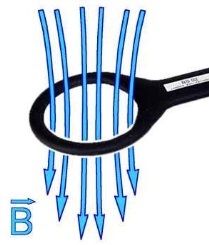
BS02, a magnetic field source, produces a B field beam with a cross-sectional diameter greater than 5cm. It is mainly used for testing of devices and circuit modules. Due to the large coverage of this field source, the generated pulsed magnetic field will act on the surface of the circuit and its internal area, welding parts, modules with wires, and integrated circuits, etc., which can roughly locate sensitive parts.
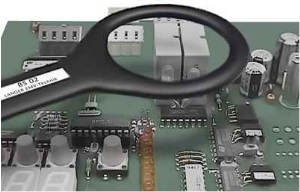
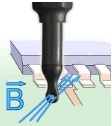
The BS 05D produces a magnetic field beam with a diameter greater than 3 mm. The magnetic field lines are oriented at 90° to the source handle and are therefore particularly useful for locating weak points between two IC boards and in hard-to-reach areas on ICs, such as between components. In practical application, generally the field source BS 02 or BS 04DB should be used to roughly locate weak points, and then BS 05D should be used for precise positioning.

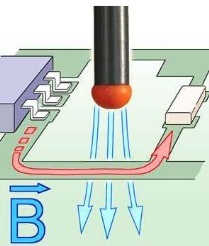
The BS 04 DB produces a magnetic field beam in the millimeter range which is especially suitable for positioning sensitive wire parts, components and their connections. During the test, the electric field beam emitted from the end of the field source is used to scan the surface of the device under test.
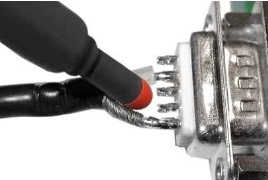
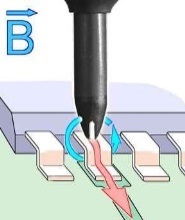
The BS 05 DU generates magnetic field beams in the millimeter range. It works like a coupling clamp, capable of selectively coupling interference currents to individual conductors, IC pins, SMD components, and thin wires (flat ribbon cables).
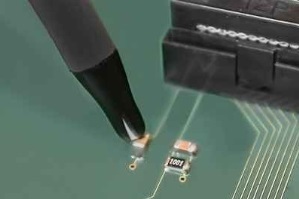
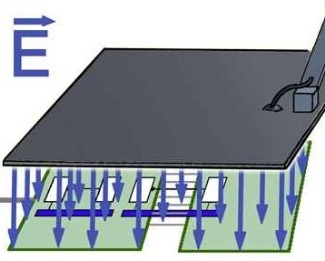
The ES 00 field source can be used to generate large-area (150 cm) field-shaped or linear coupled electric fields. Sometimes the area of the electric field sensitive point of the equipment under test will be very large, such as liquid crystal display and bus system, the sensitive area may reach 10~15 cm. Using a large-area electric field source like the ES 00, it is possible to test such weak points. The ES 00 can also be used to couple interference currents to the module.

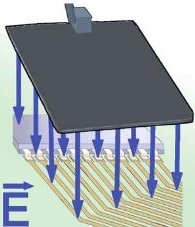
The ES 01 field source probe is suitable for applying electric field disturbances to regional or linear weak points within the range of 5 to 10 cm, the range is between ES 02 and ES 00. Interference currents can also be coupled to the module with the ES 01.
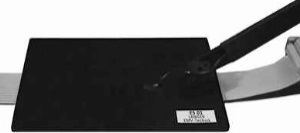
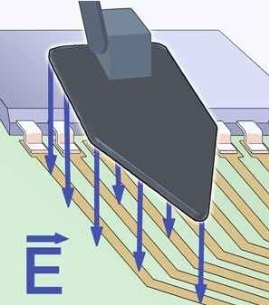
The ES02 field source has a large area and can apply coupling interference electric fields to the surface and internal areas of the chassis, connectors, modules with conductor structures, and integrated circuits (such as bus systems, liquid crystal displays) in a wide range. The tip of the field source can be used to locate small areas of weak points that are sensitive to electric fields (wires, crystal oscillators, pull-up resistors, ICs, etc.).
The resolution of the ES 02 is higher than that of the ES 01 field source.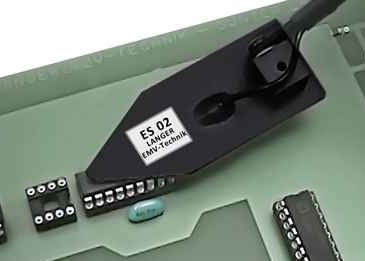
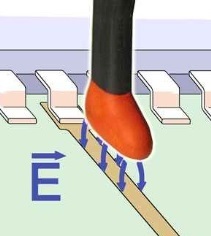
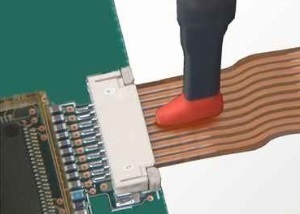
There is a narrow linear coupling electrode in the probe of the ES 05 D electric field source, which is especially suitable for applying electric fields to wiring, small components and their connectors, cables and individual SMD components such as resistors and capacitors, and it can also For measuring individual connectors or cores of flat ribbon cables.
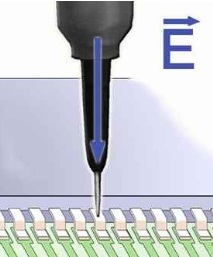
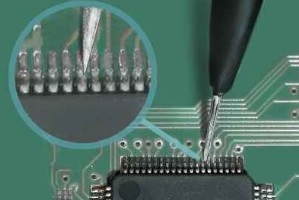
The electric field source ES 08 D is a probe for checking the sensitivity of IC pins or wiring etc. When testing, the tip of the probe is connected to a pin or wiring, and the sensitivity of the pin is detected by changing the burst intensity of the SGZ 21.
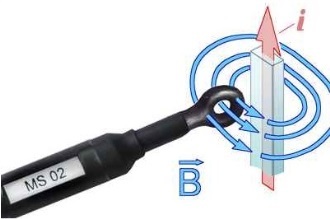
The MS02 magnetic field probe is used to measure the burst magnetic field in the equipment under test, so as to find out the path of the interference current. When in use, connect this magnetic field probe to the SGZ 21 burst generator.
The magnetic field generated within the assembly by the SGZ 21 penetrates the probe tip and induces a voltage. This drives the light emitting diodes of the MS 02. Its optical signal is sent via the LWL to the measurement input of the SGZ 21 (pulse density counter).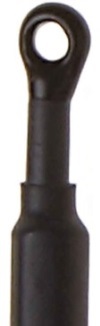
-
main feature:
Noise-sensitive defects can be located very precisely;
Generate pulsed electric and magnetic fields;
Can be used for sensitive defect location of modules, components, conductors and integrated circuits;
Suitable for connection to a burst generator according to EN 61000-4-4;
Easy to use, pen-style hand-held, and the connector adopts a buckle method.